Payaza is a financial platform that simplifies payment processes for businesses and individuals. Payaza offers secure, efficient, and user-centric solutions for managing transactions, enabling users to pay bills, purchase airtime, and complete transfers effortlessly.
About
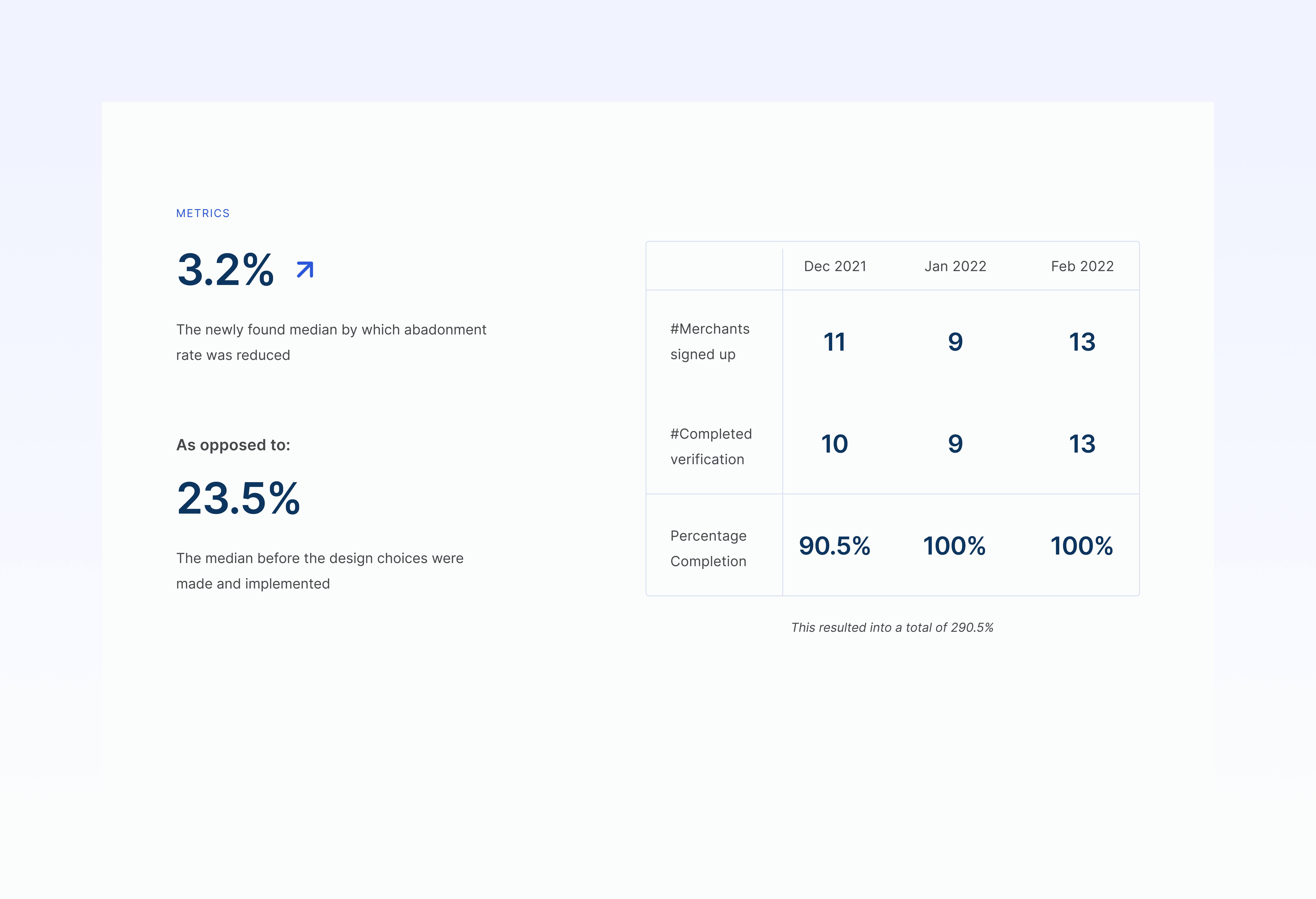
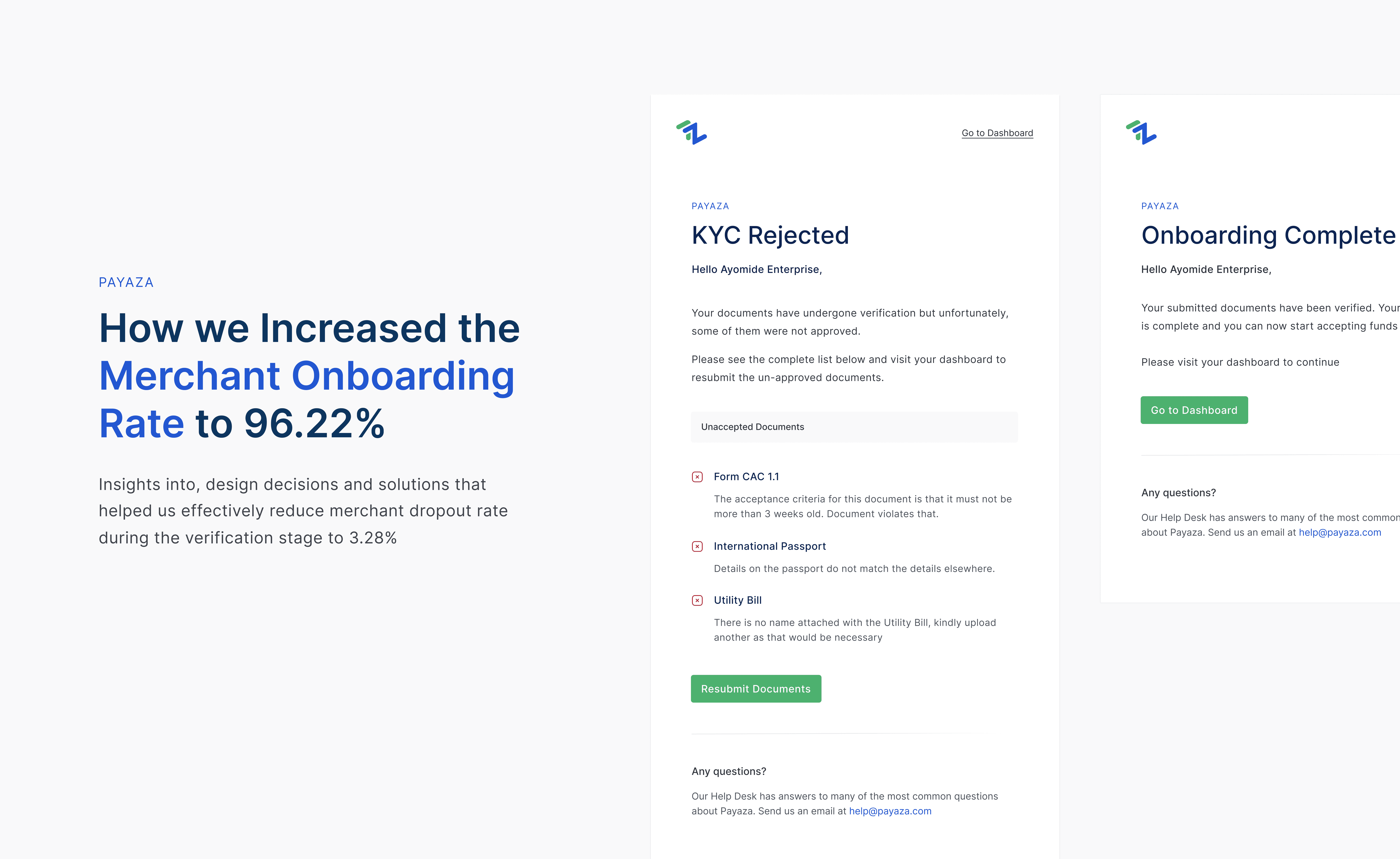
Insights into, design decisions and solutions that helped us effectively reduce merchant dropout rate during the verification stage to 3.28%
Problem
Merchants were dropping off during the verification process due to its complexity and length, which created frustration and delayed onboarding.
The financial industry is in a tight spot.
On one hand, there’s a desire to provide quick, smooth and engaging experiences for users and on the other hand, financial regulators keep coming up with new, more rigorous KYC (Know Your Customers), AML & AT (Anti Money Laundering and Anti Terrorism) requirements.
Breaching these regulations can warrant even heavier penalties for (B2Bs) as businesses move money in larger volumes.
Our approach to a safer society.
The KYC (Know Your Customer) verification process plays a pivotal role in financial institutions for preventing online crimes.
It is a set of verification processes that include document, age, address verification, as well as others as deemed necessary by the Monetary Authority (Central Bank) of a country to help its financial sector better understand its customers, and the risk level associated with them.
Why merchant verifications were stalled for Payaza
Regulatory obligations are from time to time, updated by the Monetary Authority (Central Bank) and it is expected that financial institutions adhere strictly, to these regulations. One of these regulations is to ensure that, payment companies know who their customers are.
To comply with this regulation, Payaza ensures that customers or businesses who want to integrate with or use our services undergo a verification (KYC) process.
A major challenge we (Payaza) were having was that some of the merchants dropped off when they had gotten a bit further into the verification process and that would stop us from being able to help them smoothen their payment experience.
In order to discover and propose solutions to these challenges,
I set up several meetings with the Product Design team - Our aim was to identify as many challenges as we could, as well as come up with solutions that would make the onboarding experience hassle-free for users.
Understanding what stalled verification for Merchants
The verification process cannot be by-passed. As soon as a merchant signs up to Payaza, they have to undergo the process to be able to carry out live transactions.
As stated earlier, the requirements for verification are determined by the monetary authority (central bank) and they vary based on the type of business. This left the product design team with questions. And yes, we needed answers to those questions.
So we engaged the customer experience team. We asked them to help gather the names of all Merchants who had abandoned verification, and put calls through so we could hear why from the horse’s mouth.
The results beneath are a categorised summary of the answers we got. Please note that we spoke to all such merchants and afterwards, grouped their answers.

Now let us look at the design decisions we made to solve these problems shall we?
For merchants who kept forgetting,
We carried out a heuristic evaluation of the verification process, and noticed we could enhance the process considering a visibility heuristic.
Visibility of System Status (off the screen)
We needed to succinctly, remind our merchants about their verification status because as stated earlier, they wouldn’t be able to perform live transactions without completing it.
For example, if they closed their browser or something else caused a distraction during the process, it was quite easy for them to forget they had begun verification until a representative from the customer experience team put a call through.
The CX (Customer Experience) team knew however, via the merchant’s past engagement with the sales team, a delay in their first transaction or the admin dashboard.
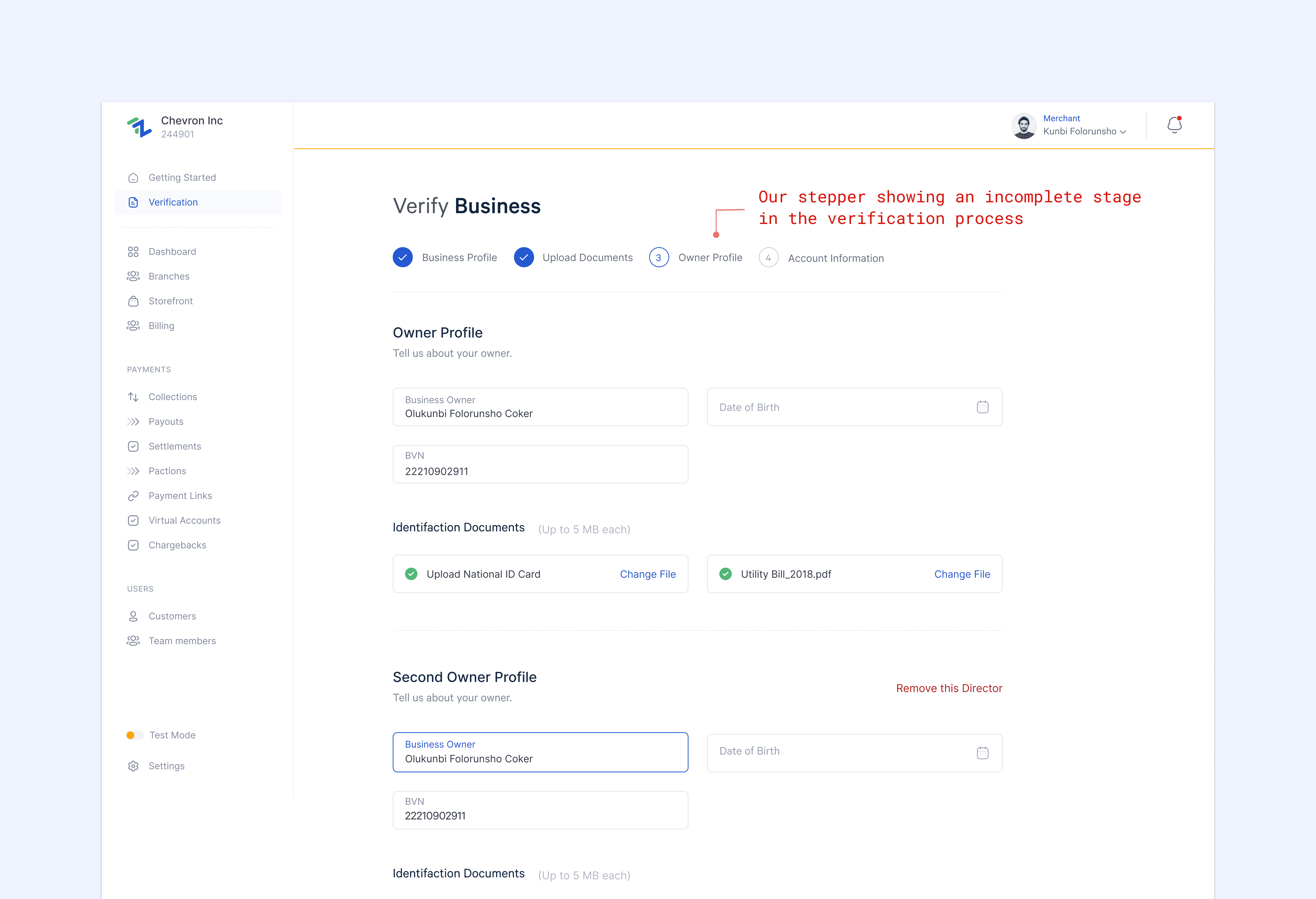
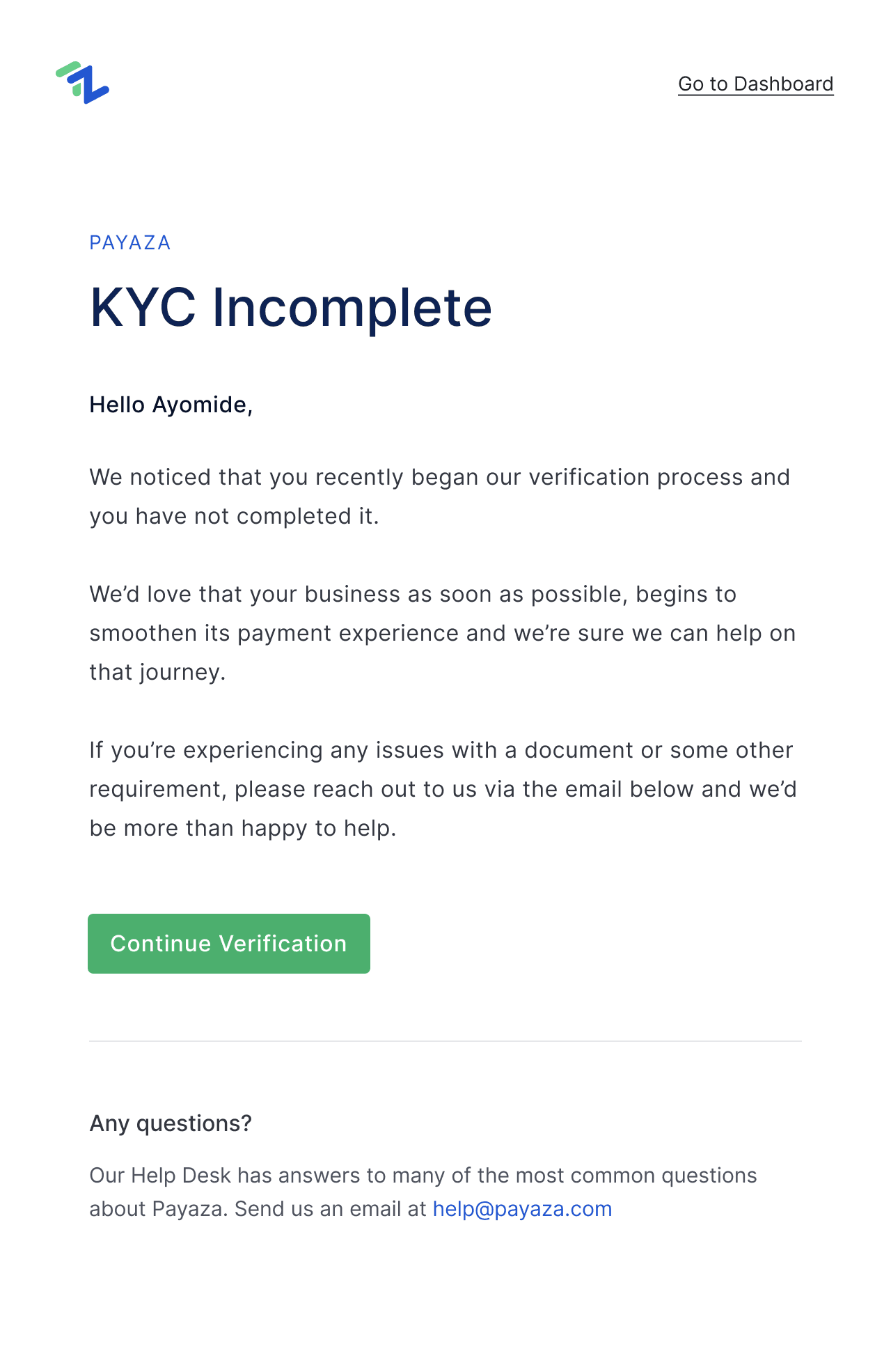
We proceeded to carry out a landscape analysis and after our analysis, decided to introduce a “KYC Incomplete” mail. We engaged the developers on the team and described the solution we were looking at.
Our final resolution was for this mail to work in tandem with the steppers on the screen, and to be triggered thirty (30) minutes after a browser session ended and the verification process left incomplete.
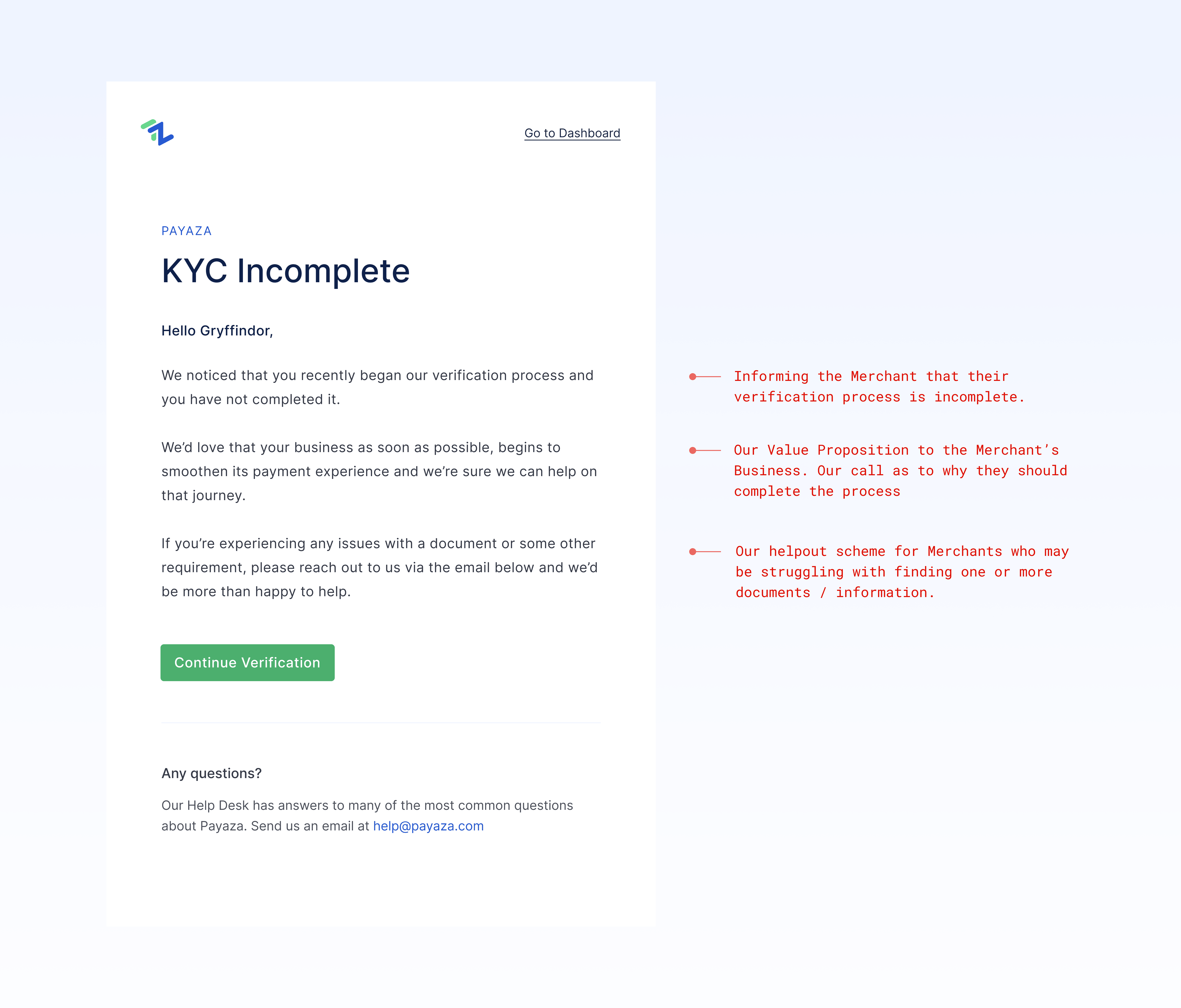
Additionally, the CX and Sales team could also reach out 24 hrs after the second mail to inquire or help merchants resolve issues as regards onboarding.
For merchants who already had a payment processor,
We were definite we could offer a lot more than what their current processor gave and only needed an opportunity to prove our value proposition.
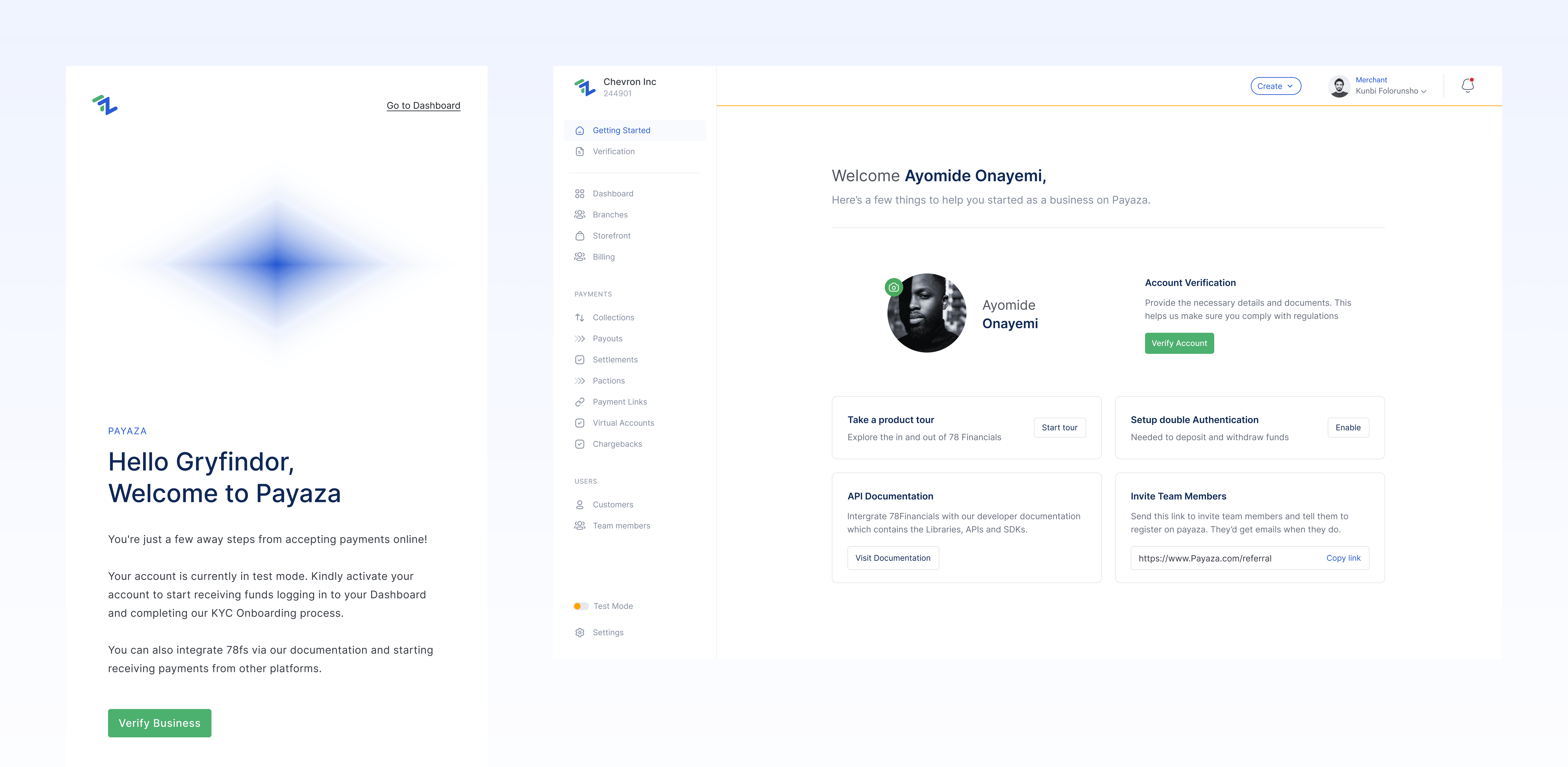
So we introduced what we called a Test Mode
We had conversations with the Product, Engineering and Management Team and decided we needed something a lot more than a demo for these merchants.
About the Test Mode
We already stated that for security concerns, Fintechs had to ensure that businesses / merchants were verified because they could move money in larger sums and impact the society negatively either by money laundering or terrorism funding.
With this in mind, we placed two constraints. The constraints would restrain any merchant from moving money in large sums as well as give us the business, an opportunity to prove our value proposition
Merchants would only be allowed to transact live in very little amounts on our demo page
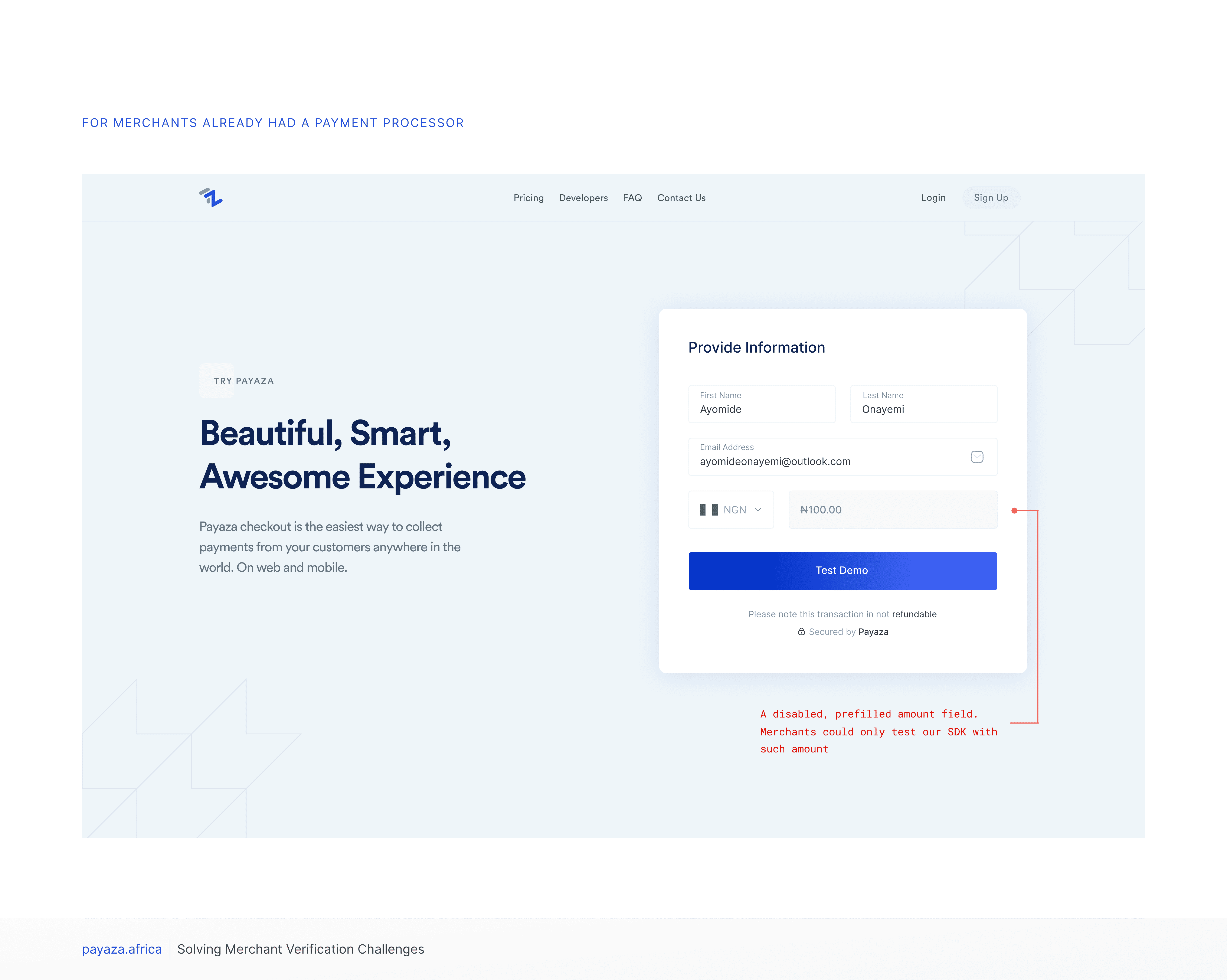
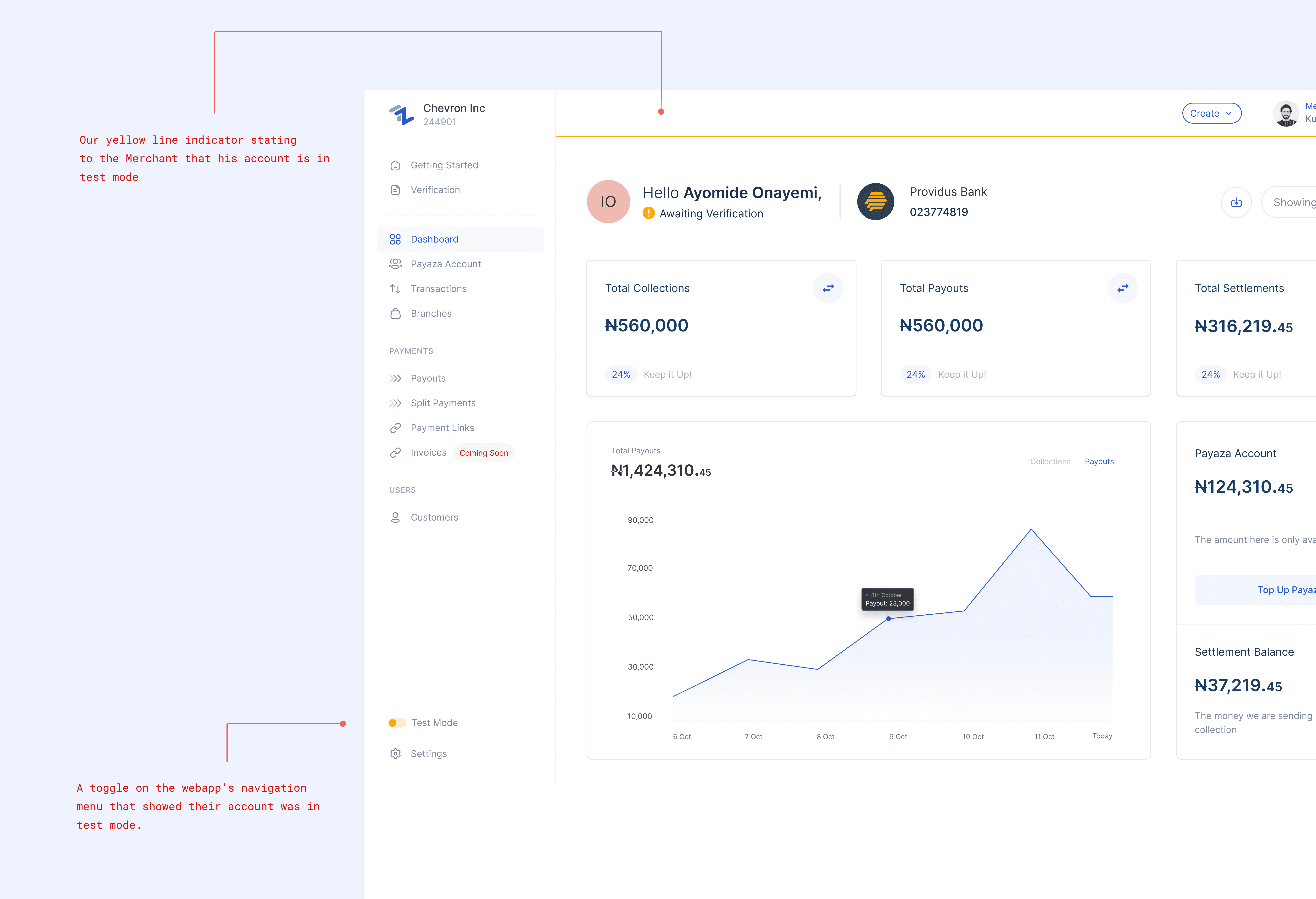
Merchants would be able to use the webapp, alongside every item on the side menu as though they had live and working accounts. A security measure we put in place is that merchants with test accounts would only be able to transact in minute amounts everyday.
In addition to this, they’d be receiving notifications via emails as SMS alerts would bear so much operational cost.
Additionally, the CX and Sales team could also reach out 24 hrs after the second mail to inquire or help merchants resolve issues as regards onboarding.
How our solutions performed